
Stop assuming your teens already “get” AI.
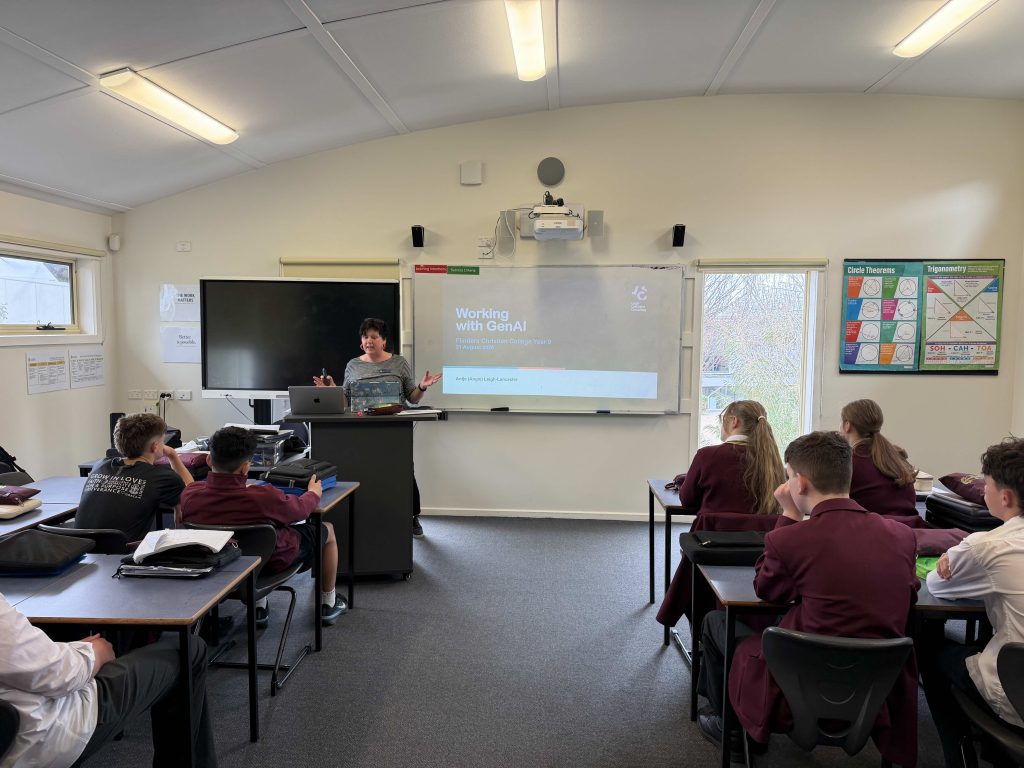
On Monday, we moved a conversation about AI in teaching and learning from the staffroom into the classroom with Year 9 students at Flinders Christian Community College. The gap between what we might assume students know about AI and what they actually understand was eye-opening.
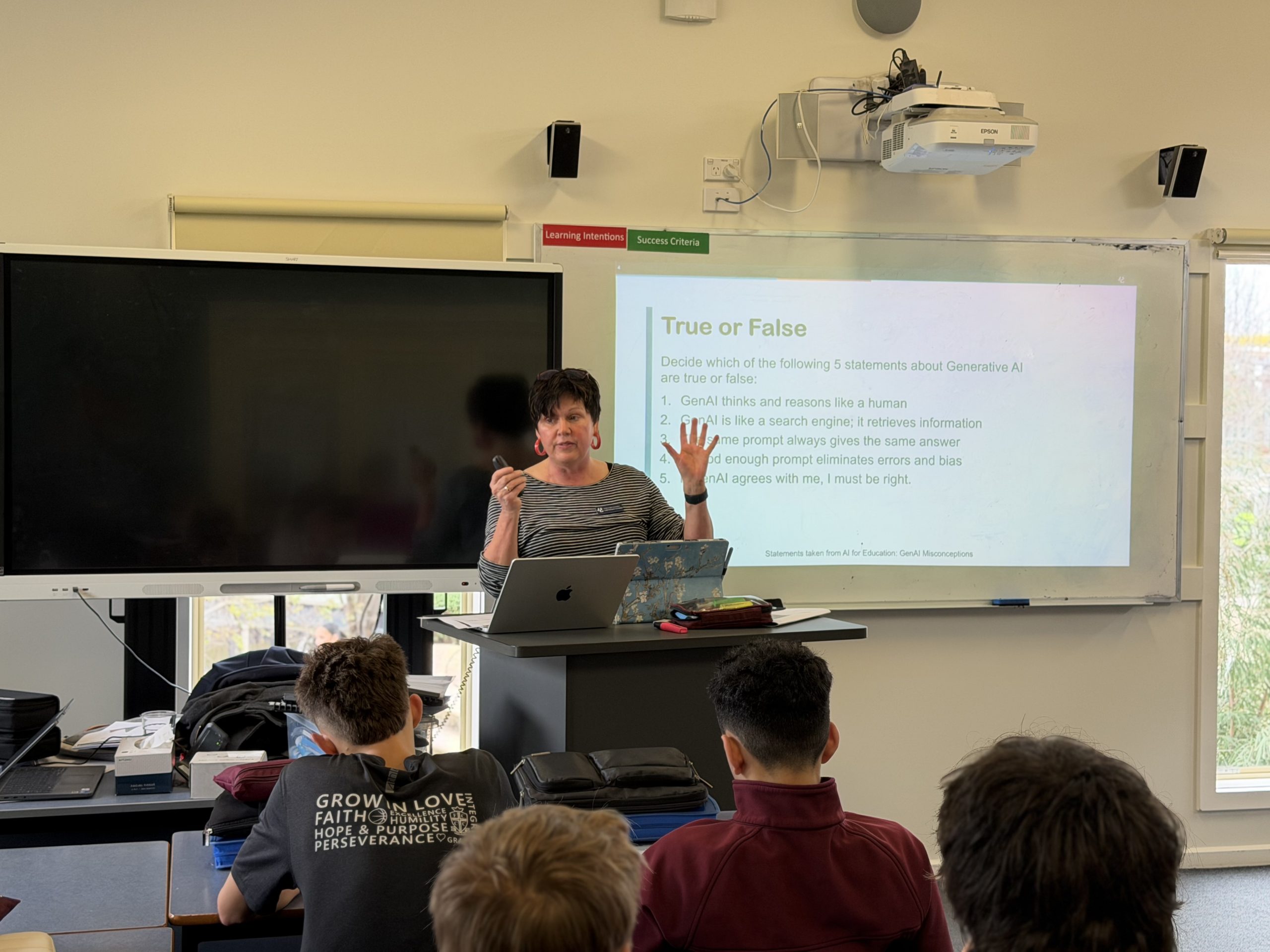
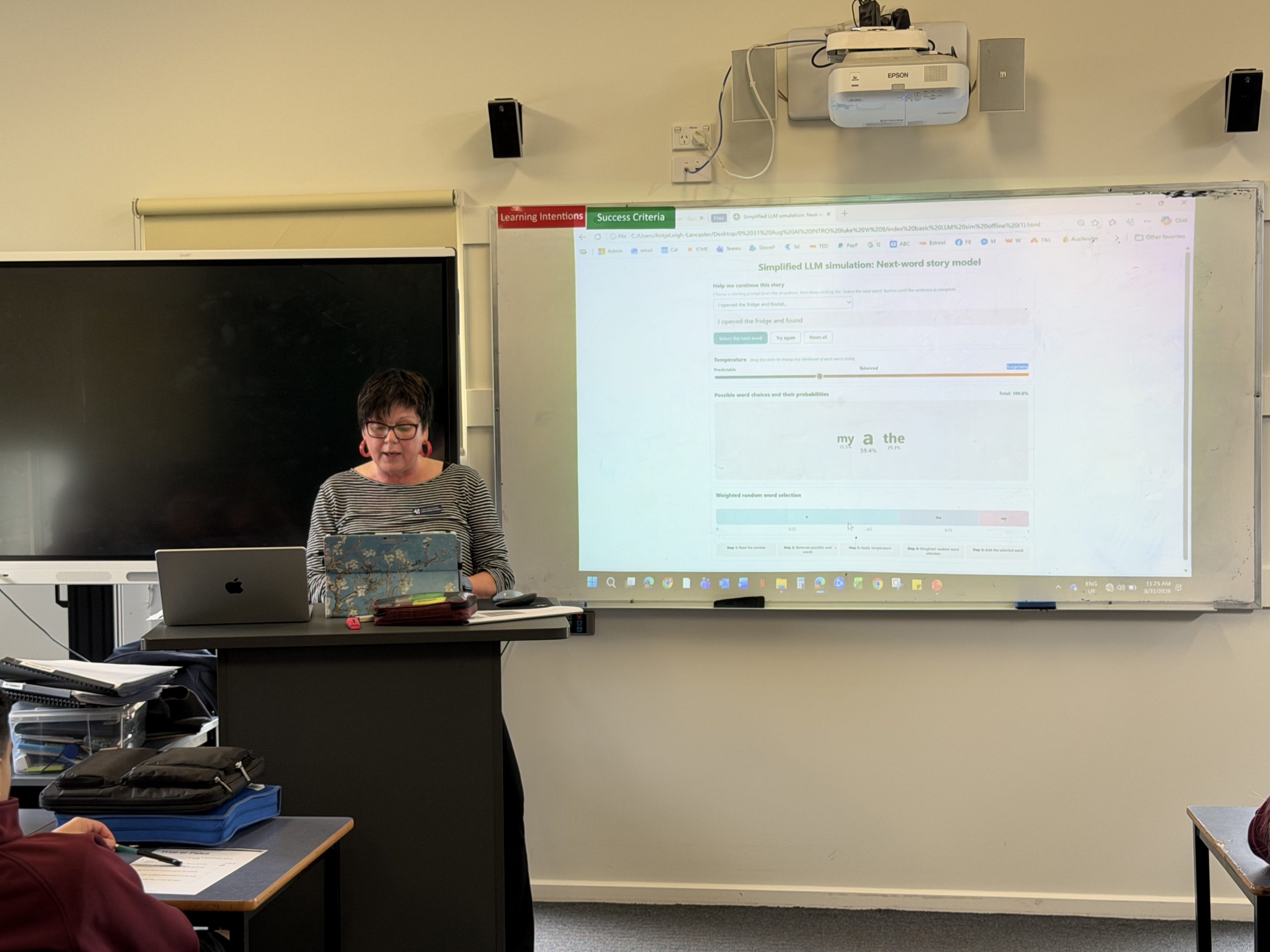
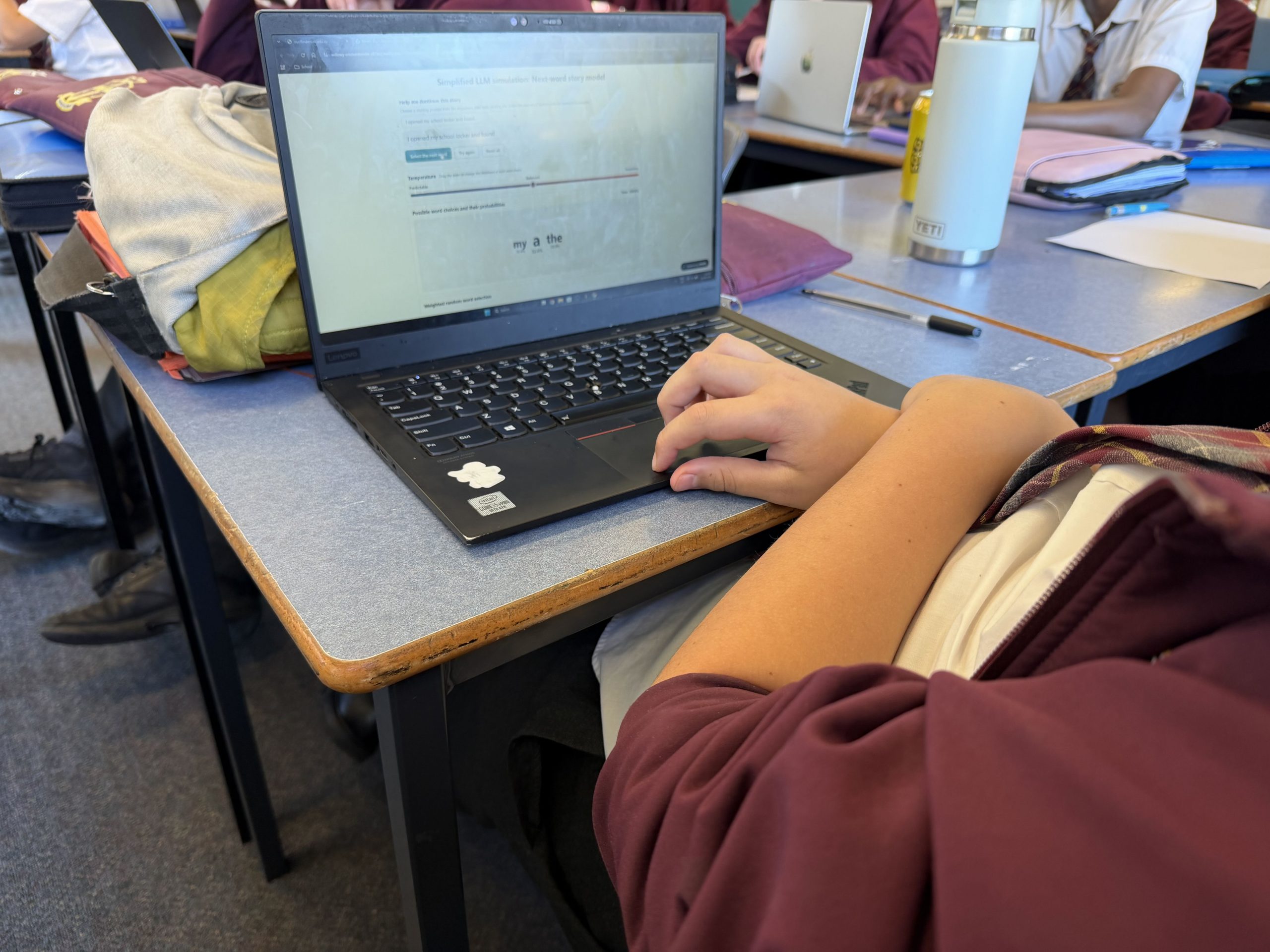
We’re fortunate to be working with Antje and David Leigh-Lancaster on this. In the first lesson, Antje used a basic LLM simulation created with Claude to give students a simple, interactive way to explore how AI responses are generated. Rather than ‘magic’, students could see the algorithmic and probabilistic processes shaping a response.
The goal was to help students better understand what AI is actually doing: while its responses can sound human, it doesn’t really think or have feelings.
The session also focused on dispelling some common AI misconceptions, as well as highlighting the risks to student learning if they offload too much of the thinking and effort involved in learning to AI.
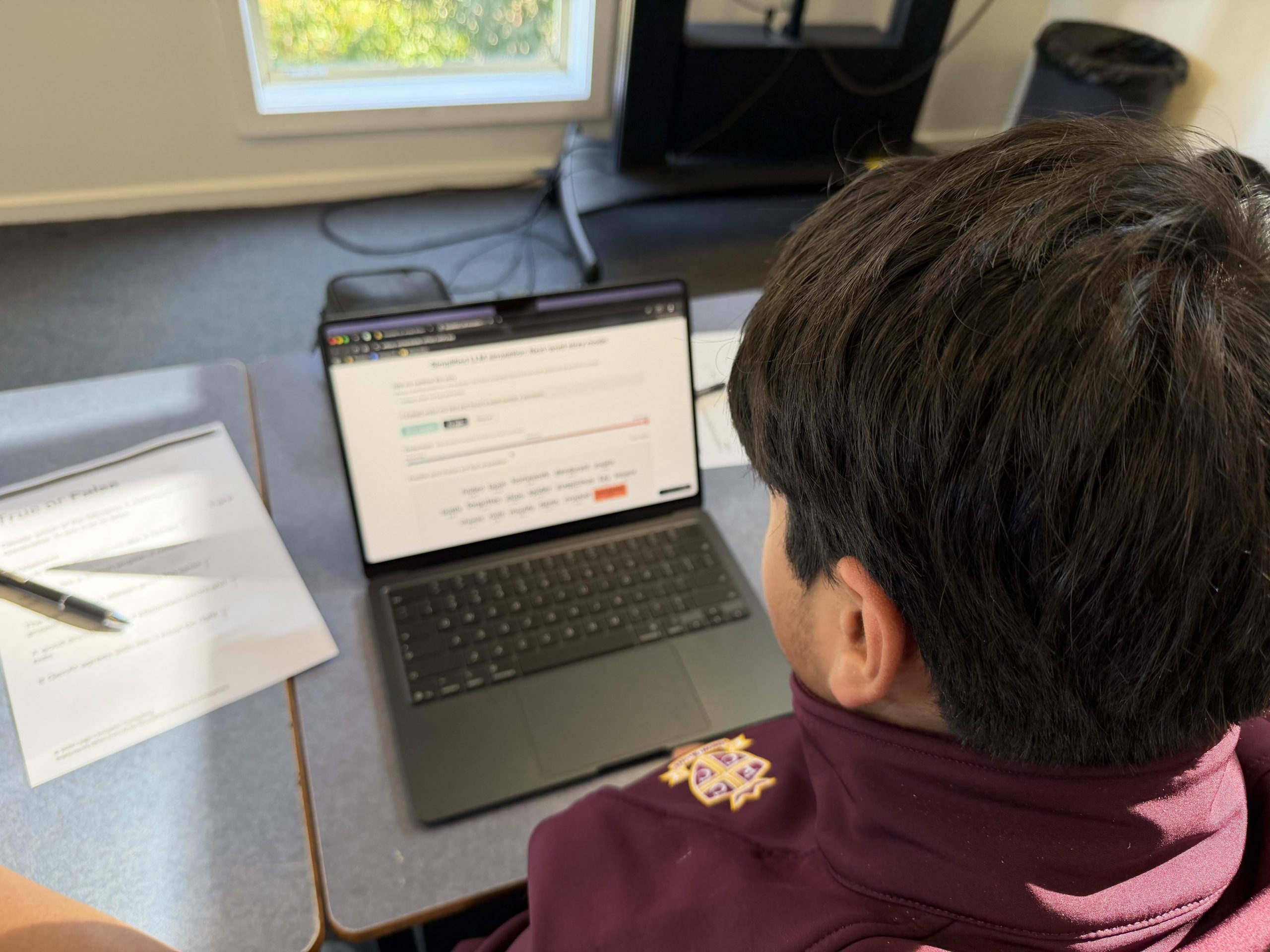
Next week, we take this further into the Year 9 mathematics classroom, using a statistics task to explore how AI can be used intentionally at selected points in the lesson. Students will use it to seek feedback on their choices of fair and representative data, while the statistical reasoning and decision making remain with them.
We’d love your input as we build this out:
- If you teach Maths or Statistics, how would you use an AI “sparring partner” in your classroom?
- If you’ve run anything similar with students, what worked, and what backfired?
- If you’re a parent, what do you think teens actually understand about how AI works?