
Navigating the Human Advantage in an AI-Enabled World
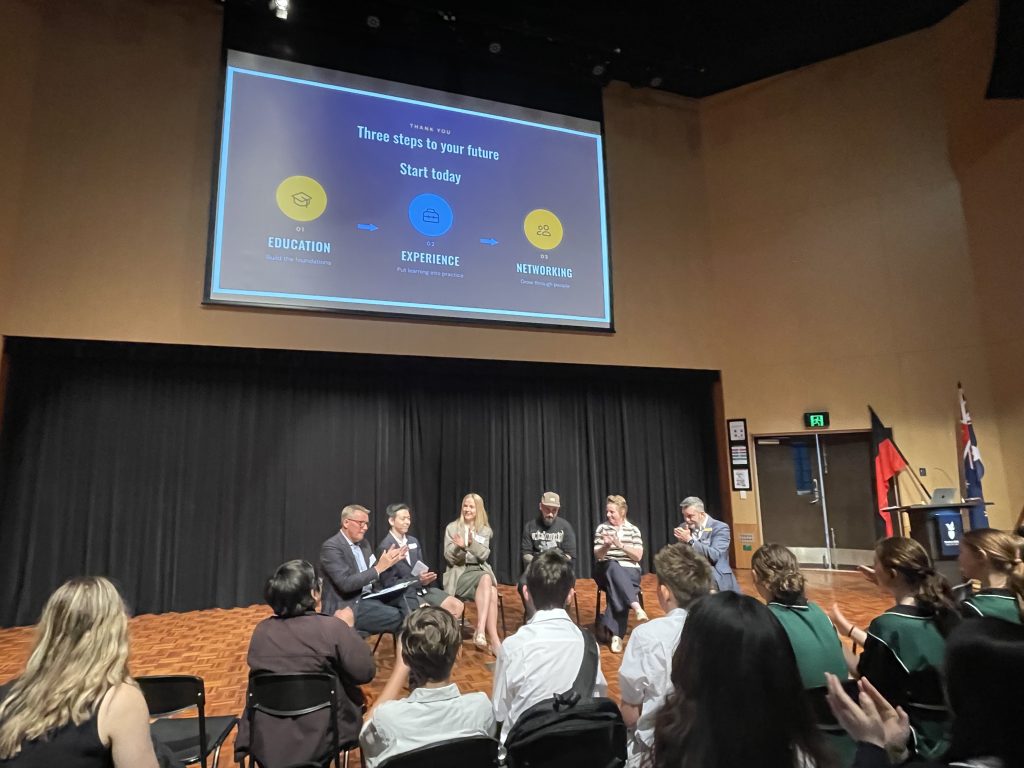
What an incredible opportunity it was to host a panel discussion on AI and the Human Advantage at It Takes a Spark on Thursday, 22nd October. For the third consecutive year, this inspiring event was hosted at The Knox School.
One of the highlights of the day was seeing students embrace the opportunity to connect with teachers, educators, and industry professionals who are passionate about the role technology is playing today and the possibilities it presents for the future. The questions from students were thoughtful, insightful, and a powerful reminder of the value they place on staying curious and continuing to learn.
I am incredibly grateful to Adrian Bertolini and Rachel Manneke Jones for their commitment to creating opportunities like this on a national scale. In addition to Victoria, It Takes a Spark events are also held in Queensland and Western Australia, providing students across the country with access to inspiring conversations and career pathways.
When the It Takes a Spark Steering Committee selected “Imagining a Better Tomorrow” as this year’s theme, it sparked an important question for me:
How do we celebrate what it means to be human in an AI-enabled world?
I knew that Tim Kitchen had been exploring this very topic through his upcoming book, The Human Advantage: Teaching, Learning and Leading in a Gen AI World, and we were fortunate to have him join the panel.
Tim was joined by an outstanding group of thought leaders representing both education and industry. Jac Manison brought an educational perspective, while Jo Smyth and Matt Piga shared valuable insights from industry. Each panellist generously took time out of their busy schedules to share their experiences, perspectives, and lessons learned as they navigate an increasingly AI-enabled world.
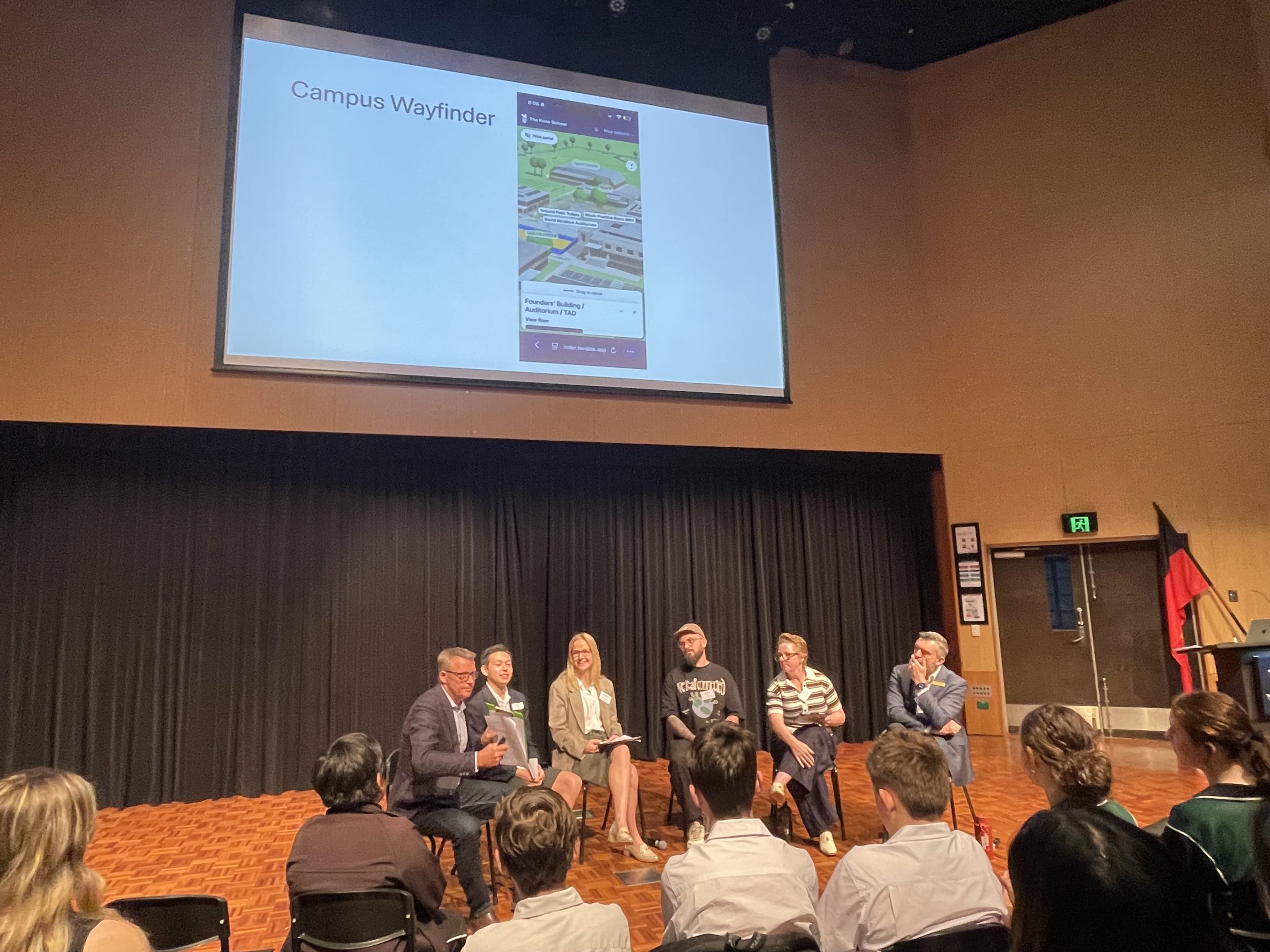
It was also fitting to include Caden Smith, a Year 11 student at The Knox School, who demonstrated how he built a web-enabled application called Campus Wayfinder with the assistance of AI. The application was actively used throughout the event, helping visitors navigate the school campus and locate workshop sessions. Seeing a student apply emerging technologies to solve a genuine problem was a wonderful example of innovation in action.
What I loved most about our discussion was that, together with the audience, we explored the idea of:
Start human. Use AI. Stay human.
While none of us can predict exactly where this technology will take us, our conversation focused on what Tim describes as the Human Gap.
We have already witnessed extraordinary advances in capability; what technology can now do is remarkable. However, our focus was on capacity; the uniquely human qualities that technology cannot replace. Our ability to pause, exercise judgement, think critically, demonstrate empathy, collaborate effectively, and collectively determine what is ethical.
Those are the capabilities that will matter most as we imagine and create a better tomorrow.
For those interested in exploring these ideas further, Tim Kitchen has previously published The Best Way to Learn is to Make: Creativity in a Gen AI World. His latest book, The Human Advantage: Teaching, Learning and Leading in a Gen AI World, is available for pre-order through at…
Buy Tim’s books